POLICY STATEMENT
Al Diyafah High School is concerned about the welfare, wellbeing, safety and best interests of all its pupils and attempts to create an environment in which pupils feel secure and valued and in which they are listened to and taken seriously.
This policy aims to outline the identification process to promote positive child protection, the management of such cases, people responsible for it and the precautions taken by school in lieu of the KHDA guidelines for child protection. All cases of child protection shall be dealt with in line with the Federal Law No. (3) of 2016 regarding the Child Rights Law (Wadeema) and Cabinet Resolution No. (52) of 2018 regarding implementing regulation of Federal Law No. (3) of 2016 regarding child rights.
OUR COMMITMENT: –
We endeavour to make our school a safe and happy place. We ensure that our recruitment and induction procedures are aligned to the Child Protection Policy of the School and any case of reported Child Abuse is immediately responded to as per the laid procedures.
We recognise that children who are abused or witness violence may find it difficult to develop a sense of self-worth. They may feel helplessness, humiliation and some sense of blame. The school may be the only stable, secure and predictable element in the lives of children at risk.
Our commitment against Child Abuse is reflected in: –
The Child Protection Policy Guidelines are divided into the following sections:
Recognizing Signs of Abuse
It can often be difficult to recognize abuse. The signs in these guidelines are only indicators and many can have reasonable explanations. Children may behave strangely or seem unhappy for
many reasons, as they move through the stages of childhood or their families experience changes. It is nevertheless important to know what could indicate that abuse is taking place and to be alert to the need to consult further.
Someone can abuse a child by actively inflicting harm or by failing to act to prevent harm. Abuse can take place within a family, in an institutional or community setting, by telephone or on the internet. Abuse can be carried out by someone known to a child like the parent, sibling, relative, and teacher or by a stranger.
1.1 Physical Abuse
Physical abuse can involve hitting, shaking, throwing, poisoning, drowning, suffocating. Symptoms that indicate physical abuse include:
P.S – According to the Dubai Police Department any visible sign of injury is physical abuse and will be recorded as an offence.
Failing to or being unwilling to prevent physical hard to a child can also be considered as Physical Abuse.
1.2 Emotional or Psychological Abuse
Emotional abuse happens when a child’s need for love, security, praise and recognition is not met, in turn abusing their psychological state causing severe to permanent hard to thus affecting their psychological growth and development. It usually co-exists with other forms of abuse. Emotionally abusive behaviour occurs if a parent, teacher or authority figure is consistently hostile, rejecting, threatening or undermining. It may involve seeing or hearing the ill-treatment of someone else. Symptoms that indicate emotional abuse include:
1.3 Neglect
The persistent failure to meet a child’s basic physical or psychological needs, mental and moral safety against danger, causing damage to their health and development. It could also mean protecting the rights of the child.
Symptoms of physical and emotional neglect can include:
Sexual Abuse
Older children and young people may additionally exhibit:
2. Dealing with a Disclosure
All child protection concerns should be acted upon immediately. If you are concerned that a child might be at risk or is actually suffering abuse:
Assessment and Record Keeping
3. Role of the Child Protection Committee
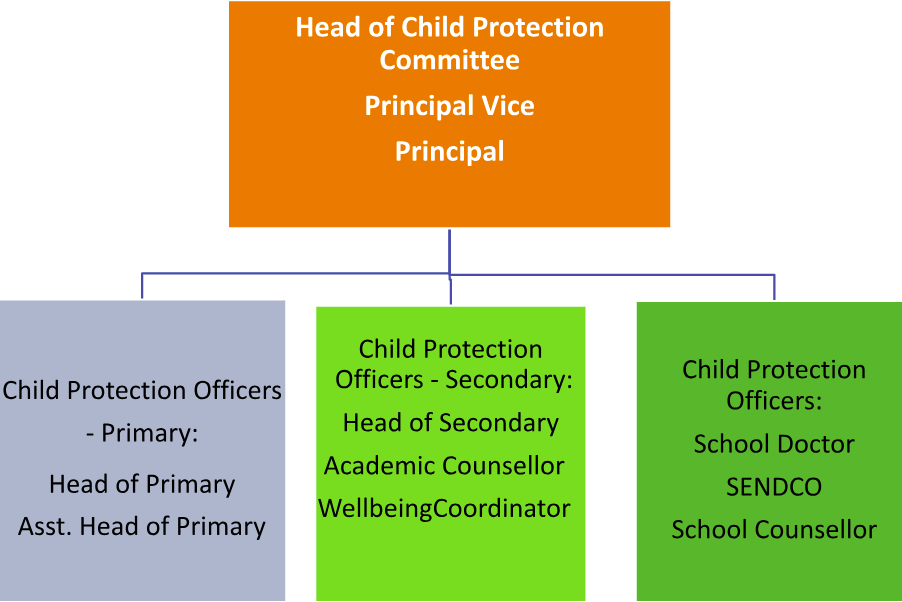
The Child Protection Committee (CPC) constitutes of 5 Child Protection Officers (CPO), the Principal, who Heads the Child Protection Committee and the Vice Principal as the Assistant Head of the CPC.
The Designated Person whose main tasks are to:
Al Diyafah High School LLC was founded in September 1982, by Late Mrs. Winnie D’Cunha. It started as a Nursery with only 2 children in a small villa located on Al Diyafah Street, in Dubai. That’s how it got its name.